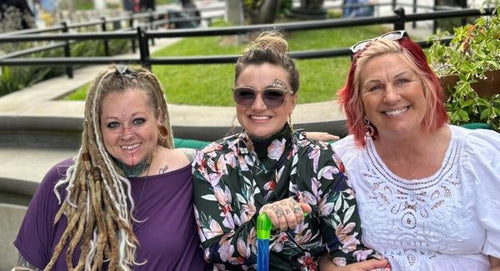
Discovering Our Hidden Strength Through Walking Sticks

Sometimes it's good to get another person's perspective on a subject. It can help to solidify you're not in the minority and also seek to find the views of a different generation or community. When Rosie contacted me to ask if we would publish her essay on mobility aids it gave both. It also shows there is intrerest in the wider community on how walking sticks benefit people and how the stigma of using one is so catastrophic to those who need one. I'll let Rosie take it from here.

I’m Rosie, an aspiring freelance writer who has been building my experience over the past year while working part-time. I love writing for local charities and businesses, creating articles that help, inspire, and make a positive difference in people’s lives.
Discovering Our Hidden Strength Through Walking Sticks
A walking stick is designed to be an amazing balancing aid that can improve stability, minimise pain, and enhance mobility. However, when first getting a walking stick, many don’t appreciate it straight away, and it can take them some time to accept that they need one. You might associate using a walking stick with a loss of independence, but it doesn’t mean this at all! Let’s take a closer look.
Challenging Societal Misconceptions
Misconceptions are a big reason many people don’t accept their new mobility aid straight away. If you’re in the same boat, challenging the misconceptions you have is a step in the right direction. Here are some you may have, and why they aren’t true:
● “Walking sticks are only for people who are old and frail”
Many people fear getting older, which is one reason why needing a walking stick might feel difficult. However, walking sticks aren’t age-specific. They can be for an injury, chronic pain, neurological conditions, or balance issues. All ages of people use walking sticks. The important part is recognising when you do need one, whatever your age.
● “Needing a walking stick means I have less independence”
Many people view independence as being able to do things by themselves without support, but this isn’t the true meaning of independence. It really means being able to carry out tasks safely and with confidence. A walking stick can help you with this, actually restoring your independence rather than taking it away. Most people say they wish they had started using one earlier when they start to feel the benefits of one.
● “I don't need a walking stick, I can walk without one.”
Walking aids do a lot more than help you walk, including managing pain, reducing fatigue, and improving balance. You will notice an improvement in the quality of how you walk, how far you can walk and possibly prevent other injuries or strains.
Breaking The Stigma
One reason people have these misconceptions about mobility aids and walking sticks is their lack of representation in the media, advertising and on social platforms. The stigma would be reduced through more visibility and diversity to help make disability feel more normalised in society. Rather than just older adults, including a wide age range of people using walking sticks in the media, on social platforms, and in advertising (such as young people with injuries) shows that it’s not only elderly people who use walking aids. Capturing real-life scenarios is also powerful for people to connect with. instead. People should be shown using walking sticks in everyday settings, like walking the dog, going to work or travelling.
How Loved Ones Can Help
If you want to choose a walking aid for your relative it will take a lot of thought. You’ll need to think about which is best for them, considering the design, length, and purpose. It's best to include them in this process, as it takes into account their personal preferences and comfort. Once you’ve helped them choose the best walking aid for them, the support doesn’t stop there. Family and friends can help by being there for them and offering encouragement. Practically this might involve rearranging their living space to make it easier for them to get around or being mindful of your pace when walking alongside them. Emotional support is most important too. For example, they might want to talk about the disability they have, and if you’re there to listen and validate their feelings, it can be the biggest help. Celebrating small successes can also help them feel encouraged. It's important to recognise not all family and friends will support a decision to use a walking stick. You have to listen to the signals your body is sending you. If your mobility needs help, don't listen to oitside noise and at least try a walking stick to see if it helps.
Getting Used To Your New Walking Stick
Getting used to using your new walking stick will take time, and that’s okay! You might want start using it somewhere that feels safe first. This might be around your home or just walking down your street. Don’t forget, walking sticks come in a wide range of beautiful designs, colours, handle styles and with a number of trendy accessories. Have you thought, if you love your walking aid, it might encourage you to use it more. People will talk to you about it, they can be real conversation starters. Pick something that reflects your personality. Most importantly stay safe, and always stylish.
* * * * * * * * *
What Lyndsay from Neo Walk says...
"If you had asked me years ago what I’d build a business around, I don’t think I ever would have said walking sticks.
But right from the start this was never really about walking sticks. It was about something deeper, how people feel when they need some support.
For too long, mobility aids have been designed to be quiet, clinical, something to be ashamed of. And yet the people using them are anything but. They are strong, expressive, and oozing personality. That disconnect was never ok with me. It was one I felt in my own life being an amputee.
At Neo Walk, we design and handmake elegant acrylic walking sticks for customers around the world. But more importantly, we’re redefining what a mobility aid can be. By focusing on design, quality, and personal expression, we transform something often associated with limitation into something that represents confidence, identity, and style.
We’re not just creating products , we’re challenging the stigma.
Our walking sticks say look at me.
Because mobility is not just about movement. It’s about visibility, dignity, and how you feel when you step outside.
And everyone deserves to keep feeling like themselves.
Lyndsay
Featured Articles
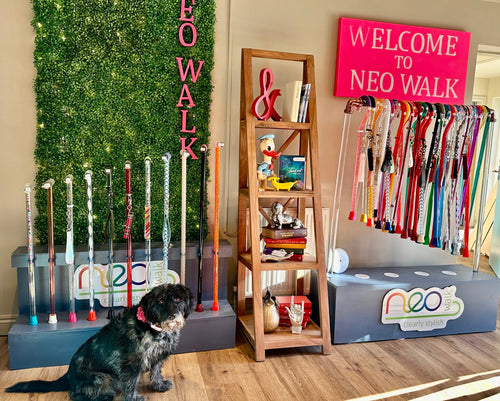
Short Guide for New Stick Users
Have you heard about the Hub at Neo Walk? We have created a warm and welcoming place for you to ...
How to Make Good Friends Great Friends!
I’ve been listening to a lot of podcasts lately, about relationships and how we succeed and fail ...